Your wedding menu does more than feed a room. It helps set the pace of the celebration, gives guests something to gather around, and often becomes one of the details people remember long after the music stops. The strongest menus feel connected to the couple, not assembled from a generic list of appetizers, entrees, and desserts.
A thoughtful menu can reflect where you grew up, what you order on date night, the food your families make for holidays, or the city where you chose to celebrate. It can also make the reception feel more natural from one part of the evening to the next. The goal isn’t to serve the most dishes. It is to create a meal that feels generous, intentional, and easy for guests to enjoy.
Start With The Atmosphere You Want To Create
Food carries mood. A candlelit plated dinner creates a different energy than shared platters moving around a long table, and a lively cocktail reception with small plates feels different from both. Before choosing dishes, couples should think about how they want the room to feel once guests begin eating.
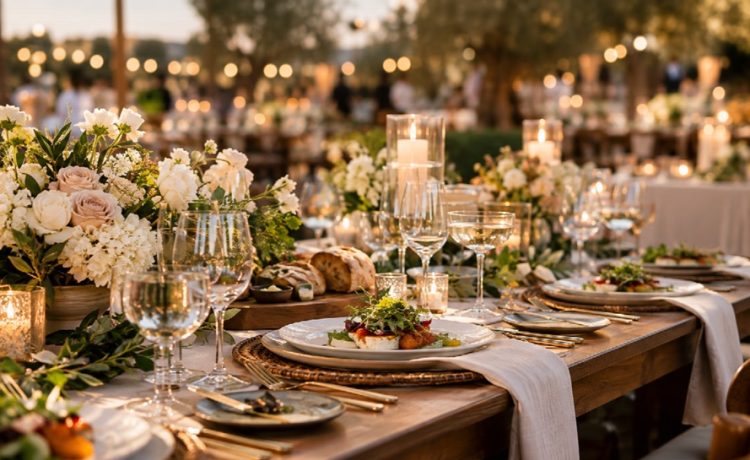
A formal evening may call for several paced courses, refined presentation, and quieter transitions between dishes. A garden reception may feel better with seasonal produce, family-style service, and food that encourages guests to talk across the table. A rooftop celebration can lean into passed bites, interactive stations, and a menu that keeps people moving instead of anchoring everyone to a seat for two hours.
A few questions can help narrow the direction:
- Should dinner feel elegant and composed or warm and communal?
- Do guests need time at the table, or should the party stay active?
- Should the food feel familiar, adventurous, or somewhere in between?
- Are there family traditions or cultural influences worth building into the meal?
- Which part of the menu should guests still be talking about the next day?
Starting with the experience makes later choices easier. Instead of comparing dozens of unrelated dishes, couples can judge each option against the feeling they want to create.
Let The Menu Say Something About The Couple
Personal food does not have to mean novelty for novelty’s sake. A memorable menu might include a polished version of the meal a couple ate on their first date, a dish inspired by a grandparent’s cooking, or flavors tied to places they have traveled together. Even one or two details can make dinner feel connected to the people being celebrated.
Couples looking for inspiration can use examples rather than treating them as fixed templates. Crateful Catering’s guide to wedding catering menu ideas for Los Angeles couples shows how cocktail-hour bites, dinner formats, globally influenced mains, vegetarian dishes, and late-night snacks can all work together across a Los Angeles celebration.
Those details give guests something to connect with. They also make the meal feel less like a standard wedding package and more like part of the story unfolding around them.
Give Cocktail Hour More Attention Than It Usually Gets
Cocktail hour is often treated as a bridge between the ceremony and dinner, but it does a lot of work. Guests may be hungry after traveling, waiting through photos, or moving between locations. The food needs to arrive quickly enough to make people comfortable without leaving them too full for dinner.
Passed appetizers work well because they let guests eat while talking. The strongest selections mix textures, temperatures, and flavor profiles instead of repeating the same bite style five different ways.
A balanced spread might include:
- One rich bite, such as a petite beef crostini, truffle arancini, or crisp potato topped with something savory.
- One seafood option, such as tuna tartare, mini crab cakes, or a citrus-forward ceviche spoon.
- One fresh vegetable-focused bite that feels complete rather than like a substitute.
- One playful option that loosens up the room, such as a small taco, slider, or elevated comfort-food bite.
Interactive stations can work well too, especially when the reception has a longer cocktail period. A raw bar, cheese display, hand-finished bruschetta station, or chef-attended tasting gives guests a reason to gather and adds movement to the space.
Choose A Dinner Format That Fits The Pace Of The Reception
The way food reaches the table affects the entire timeline. Couples sometimes choose service style based only on appearance, then find that dinner runs longer than expected or creates a more formal mood than they wanted. Service format should support the guest count, venue, schedule, and the event’s personality.
A plated dinner gives the kitchen and service team strong control over presentation and timing. It works beautifully for formal receptions, speeches between courses, and celebrations where the meal is a central feature of the evening.
Family-style service changes the mood immediately. Platters moving around the table encourage conversation and create a sense of abundance. It can feel elegant without becoming stiff, especially when the menu includes colorful vegetables, composed salads, shared proteins, and sides designed to look beautiful in the center of the table.
Buffets offer variety and flexibility, but they need thoughtful layout and pacing. Long lines can pull guests out of the celebration, so staffing, table release, and station design deserve as much attention as the food itself.
Couples can also mix formats:
- Passed appetizers followed by a plated dinner.
- A plated first course, followed by family-style mains and sides.
- Food stations followed by a seated dessert.
- A formal dinner followed later by casual late-night snacks.
There is no prize for choosing one service style and using it for every part of the night. A blended approach can make the reception feel more dynamic and keep the energy moving naturally.
Build The Main Course Around Variety, Not A Long List
More choices do not always make a better dinner. Too many entrees can complicate service, slow the kitchen, and make the menu feel scattered. A tighter selection with clear contrast often gives guests a better experience.
One rich protein, one lighter protein or seafood dish, and one serious plant-forward option can cover a surprising amount of ground. Sides and sauces can add range without requiring five separate main courses. Seasonal vegetables, bright herbs, citrus, roasted roots, grains, handmade pasta, or a composed salad can add color and balance to the plate.
The vegetarian choice deserves the same care as everything else. A guest should not feel as though the kitchen removed the meat from a standard plate and called the remaining sides dinner. Mushroom risotto, roasted cauliflower with layered sauces, handmade pasta, stuffed squash, vegetable tagine, or another fully developed dish can give every guest a meal worth remembering.
That same thinking applies to temperature and texture. Crispy elements should stay crisp. Sauces should hold. Proteins should remain tender through service. A tasting is the right time to ask how each dish behaves outside the quiet setting of a private kitchen.
Make Dietary Needs Part Of The Menu From The Beginning
Dietary accommodations feel much more natural when they are planned early. Waiting until final guest counts arrive can leave vegetarians, vegans, gluten-free guests, or people with allergies receiving a completely separate meal that looks unrelated to everyone else’s food.
A better approach is to choose dishes that work for a broad range of guests, then make targeted adjustments as needed. A vegetable course can be naturally gluten-free. You can design a salad without dairy and finish it individually for guests who want cheese. A grain or roasted vegetable side can serve the whole room rather than appearing only on special plates.
The planning conversation should cover:
- Vegetarian and vegan needs.
- Gluten sensitivities or celiac requirements.
- Nut, shellfish, dairy, and other serious allergies.
- Religious dietary practices.
- Cross-contact concerns for guests with medically significant restrictions.
Clear communication is essential. Guests should know what they are being served, and the service team should understand which plates require special handling. Couples do not need to turn the menu into a list of restrictions. The food can still feel celebratory while making sure everyone at the table is cared for.
This is also where experienced catering teams earn their place. They understand how to create alternatives that fit the same visual and culinary direction as the main menu, helping the entire table share one cohesive meal.
Do Not Let Dessert Be An Afterthought
Cake can still be part of the night, but it does not have to carry the entire dessert experience. Smaller sweets, passed desserts, gelato, warm pastries, cookies, or plated desserts can add variety and make the final course feel connected to the rest of the menu.
Couples who love tradition might serve a classic wedding cake alongside one unexpected sweet. Others may skip a large cake in favor of a dessert table built around several smaller items. Coffee and after-dinner drinks can also create a natural transition between the meal and dancing.
Late-night food serves a different purpose. After a few hours on the dance floor, guests are not looking for another composed course. They want something familiar, satisfying, and easy to eat.
Good late-night options include:
- Small burgers or chicken sandwiches.
- Street-style tacos.
- Personal pizza slices.
- Fries with dipping sauces.
- Warm churros or doughnuts.
- Savory breakfast-inspired bites for very late receptions.
The shift from elegant dinner to relaxed snack can be one of the most enjoyable parts of the night. It gives the reception a second wind and makes the final hours feel generous, not drawn out.
Plan For Flow, Not Just Flavor
A tasting can make it easy to focus entirely on individual dishes. Every plate arrives at the right temperature, the room is calm, and only a few people are at the table. A wedding reception is different. Hundreds of small timing decisions affect whether the food still feels impressive once the event is moving.
Couples should ask how long service takes, when speeches fit best, how the catering team handles special meals, and what happens if the ceremony runs late. It is also worth understanding how long guests will wait between courses and whether the venue has the kitchen capacity needed for the chosen menu.
A few practical questions can prevent problems later:
- How many servers are planned for the guest count?
- Will food be cooked or finished on site?
- How are special meals identified and delivered?
- What happens to the dinner timeline if photos or speeches run long?
- How much time do you need to reset the room for dancing or dessert?
- Which menu items are most sensitive to delays?
Food and schedule are closely tied together. A beautiful menu becomes much more memorable when it reaches guests at the right moment.
Frequently Asked Questions About Wedding Menu Planning
How Many Entrees Should A Wedding Menu Include?
Most weddings do not need a long list of entree choices. Two main options plus a well-developed vegetarian or vegan dish can cover a wide range of guests without creating unnecessary complexity. The final number should reflect the guest count, service style, kitchen setup, and how the caterer manages advance selections. A tighter menu often leads to smoother service and more consistent plates.
Should Couples Offer A Buffet Or Plated Dinner?
Both can work well, and the better choice depends on the type of reception you’re planning. Plated service tends to feel more formal and controlled, while a buffet can offer flexibility and a wider sense of choice. Family-style service sits somewhere in the middle, creating a seated experience with a more social feel. Couples should compare the format against their timeline, venue, budget, and preferred atmosphere.
How Can A Wedding Menu Feel More Personal?
Personalization can come from flavors, family recipes, places the couple has traveled, favorite restaurants, or dishes connected to meaningful memories. The menu does not need to recreate those foods exactly. A caterer can interpret them in a way that fits the event’s service style and formality. Even one or two thoughtful references can make the meal feel far more connected to the couple.
Do Wedding Guests Need A Late-Night Snack?
A late-night snack is not essential, but it can be a great addition to receptions with several hours of dancing or a long gap between dinner and the end of the event. Small, familiar foods usually work better than another formal course. The goal is to give guests something satisfying without slowing the party down. Couples can also time the snack around transportation or the final bar service.
How Should Couples Handle Food Allergies At A Wedding?
Discuss allergies with the caterer early, and confirm again once you’ve collected guest responses. The catering team needs clear information about ingredients, preparation, and possible cross-contact. Guests with serious allergies may require individually prepared plates or additional communication before the event. Good planning helps those meals match the same presentation and quality as the rest of the menu.
Is A Wedding Tasting Really Necessary?
A tasting gives couples a chance to evaluate flavor, portion size, presentation, and how the courses work together. It is also the best time to make practical adjustments before the final menu is set. Couples can ask about substitutions, seasonal changes, sauces, dietary versions, and service timing while everything is still flexible. The tasting should help refine the menu, not simply confirm that each individual dish tastes good.
How Far In Advance Should The Wedding Menu Be Finalized?
Discuss the broad direction early, especially if the wedding requires a custom menu, specialty ingredients, or complex service. Final dish selections are often completed closer to the event once tastings, guest counts, and dietary needs are clearer. Ask your caterer for specific deadlines so stationery, meal selections, rentals, and staffing stay coordinated. Leaving a little room for seasonal adjustments can also help the kitchen serve ingredients at their best.
A Memorable Menu Feels Like Part Of The Celebration
The best wedding food rarely feels separate from the rest of the day. It matches the setting, supports the pace of the reception, welcomes every guest, and gives the couple a chance to share something personal without explaining every choice.
A menu can be elegant without being stiff, creative without becoming complicated, and generous without trying to include everything at once. The strongest choices usually come from a clear point of view, thoughtful service, and a catering team that understands how food behaves in the middle of a real event.
Guests may not remember every centerpiece or every song. They will remember gathering around the table, tasting something they loved, and feeling well cared for. That is what turns dinner into part of the celebration rather than a break between the ceremony and the dance floor.